


Tweet Tweet
Anaheim Signs logo
Telphonelogo

714-270-0322 Call Rick!

The Importance of ADA-Compliant Business Signage: What You Should Know

When it comes to creating an inclusive environment, ADA-compliant business signage plays a vital role. These signs not only enhance accessibility for individuals with disabilities but also elevate your brand’s reputation. Ignoring these regulations can lead to legal issues and alienate potential customers. Understanding the key requirements and benefits can help you make informed decisions. So, what should you know about ensuring your signage meets these essential standards?

Understanding the ADA and Its Signage Requirements

When you run a business, understanding the Americans with Disabilities Act (ADA) and its signage requirements is crucial for ensuring accessibility.

The ADA mandates that public spaces provide clear, readable, and accessible signage for individuals with disabilities. This includes specific guidelines on font size, contrast, and tactile elements for those with visual impairments.

You’ll need to ensure that signs are appropriately placed, so they’re easily visible and reachable. For example, accessible restrooms and exits must have signs that meet ADA specifications.

By familiarizing yourself with these requirements, you can create an inclusive environment that caters to everyone.

Ultimately, adhering to ADA signage standards not only fulfills legal obligations but also enhances your business’s reputation as a welcoming space for all customers.

The Benefits of ADA-Compliant Signage for Businesses

Implementing ADA-compliant signage not only meets legal requirements but also brings numerous benefits to your business.

First, it enhances accessibility, making it easier for all customers, including those with disabilities, to navigate your space. This can lead to increased foot traffic and customer loyalty.

Second, it demonstrates your commitment to inclusivity, which can improve your brand reputation and attract a diverse clientele.

Third, ADA-compliant signage can reduce the risk of legal issues and fines associated with non-compliance.

Lastly, having clear and consistent signage can streamline operations, helping staff and customers alike.

Key Features of ADA-Compliant Signage

To ensure your business signage meets ADA standards, it’s crucial to understand its key features.

First, your signs should include tactile lettering and Braille, allowing visually impaired individuals to read important information. The characters must be uppercase, with a minimum height of 5/8 inch for readability.

Contrast is vital; use light backgrounds with dark text or vice versa to enhance visibility. Additionally, ensure that signs are mounted at an appropriate height—between 48 and 60 inches from the floor—so they’re accessible to everyone.

Finally, avoid any glare or reflections that could obstruct readability. By incorporating these key elements, you’ll create ADA-compliant signage that effectively serves all customers, promoting inclusivity and safety in your business environment.

Types of Signage That Must Comply With ADA Standards

Understanding the key features of ADA-compliant signage sets the foundation for knowing which types of signage must adhere to these standards.

First, any permanent signs, like those indicating restrooms, exits, or room numbers, must comply. Directional signs that guide individuals through your facility also need to meet ADA requirements.

Additionally, signs that identify accessible features, such as parking spaces or entrances, are essential. You should also consider informational signs that convey important messages, ensuring they’re accessible to all.

Lastly, tactile and braille signage is crucial for aiding visually impaired individuals. By ensuring these types of signage meet ADA standards, you create a more inclusive environment for everyone who visits your business.

Common Mistakes to Avoid in ADA Signage

While creating ADA-compliant signage is vital for inclusivity, many businesses still overlook common pitfalls that can undermine their efforts.

One major mistake is using low-contrast colors, which can make text hard to read. You should also avoid placing signs too high or too low; the height matters for visibility.

Another issue is neglecting tactile elements; braille isn’t optional, so ensure it’s included. Additionally, steer clear of overly complex language or symbols that can confuse.

Ensure your signage isn’t cluttered—simplicity aids comprehension. Lastly, don’t ignore maintenance; damaged signs can lose their effectiveness.

How to Assess Your Current Signage for Compliance

Assessing your current signage for ADA compliance is essential for ensuring accessibility. Start by examining the location of your signs. They should be placed at appropriate heights and angles for easy visibility.

Next, check the font size and style—use sans-serif fonts in a minimum size of 5/8 inch for optimal readability. Ensure that contrast between text and background meets the required standards for visibility. Don’t forget braille and tactile elements; these should be present where necessary.

Evaluate the content for clarity and simplicity, avoiding jargon. Lastly, consider if all sign types are compliant, including directional, informational, and restroom signs. Signage regulations are critical to follow to ensure you meet legal standards.

Regular audits of your signage can help maintain compliance and enhance accessibility for all.

Designing Signage for Accessibility: Best Practices

When designing signage for accessibility, you’ll want to prioritize clarity and legibility to ensure everyone can navigate your space easily. Use simple, easy-to-read fonts and maintain a high contrast between text and background colors.

Keep your messages brief, and avoid complex language. Make sure the signs are large enough to be seen from a distance, and place them at appropriate heights for both standing and seated individuals.

Use icons or symbols to supplement text, reinforcing understanding. Ensure that signage is positioned in well-lit areas to enhance visibility.

Finally, consider the flow of foot traffic to avoid confusion and create a straightforward path to essential locations. These best practices will help create an inclusive environment for all your visitors.

The Role of Braille and Tactile Text in Signage

Incorporating Braille and tactile text in signage not only enhances accessibility but also empowers individuals with visual impairments to navigate spaces confidently. When you include these features, you’re taking a significant step towards inclusivity.

Braille allows users to read critical information, while tactile text provides essential details through touch. Ensure that the Braille is placed at an appropriate height and is easy to locate. Using contrasting colors for tactile elements can further enhance visibility for those with partial sight.

Staying Updated With ADA Guidelines and Regulations

As you prioritize Braille and tactile text in your business signage, it’s equally important to stay informed about ADA guidelines and regulations. Regulations can change, and staying up-to-date ensures your signage remains compliant.

Regularly check the ADA website and subscribe to relevant newsletters for the latest updates. Attend workshops or webinars focused on accessibility to deepen your understanding.

Collaborating with professionals who specialize in ADA compliance can also be beneficial. They can provide insights tailored to your specific business needs.

Promoting Inclusivity Through Effective Signage

Effective signage not only guides customers but also fosters an inclusive atmosphere that welcomes everyone. By ensuring your signs are ADA-compliant, you’re making a commitment to accessibility.

Use clear fonts and contrasting colors to enhance readability for individuals with visual impairments. Incorporating braille and tactile elements allows those who are blind or have low vision to navigate your space confidently.

Consider multilingual signs to cater to diverse communities, making your business more approachable. Remember, inclusivity isn’t just about compliance; it’s about creating a welcoming environment for all.

When your signage effectively communicates, it shows you value every customer’s experience. Prioritizing accessibility in your business reflects a commitment to service that resonates positively with everyone who walks through your doors. Additionally, adhering to ADA guidelines for accessibility ensures that your signage meets the necessary standards for all users.

Conclusion

Incorporating ADA-compliant signage isn’t just about following regulations; it’s about creating a welcoming space for everyone. By prioritizing accessibility, you enhance customer experiences and demonstrate your commitment to inclusivity. Remember to regularly assess your signage and stay updated on guidelines to ensure compliance. By doing so, you’ll not only avoid legal pitfalls but also attract a diverse clientele, ultimately boosting your business’s reputation and success. Embrace the importance of accessible signage today!
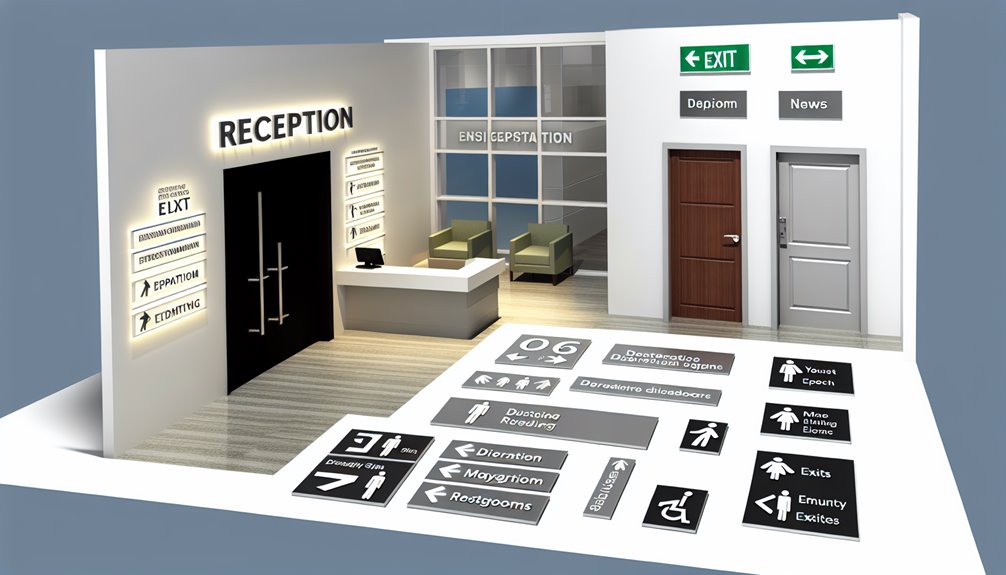
Costa Mesa Interior Office Signs

#image_title

It is understood that interior office signs in Costa Mesa serve more than just functional roles; they’re key to reinforcing your brand and creating a navigable workspace. From directional and wayfinding signs that guide visitors effortlessly, to aesthetically pleasing designs that embody your brand’s identity, each sign plays a pivotal role. Opting for durable, high-quality materials not only reflects your professionalism but also guarantees longevity. Don’t overlook the importance of compliance with ADA and local regulations to avoid legal pitfalls and foster inclusivity. Curious about how the right signs can transform your office space? Stick with us to uncover more benefits.

Types of Interior Office Signs

Interior office signs, essential tools for navigation and branding, come in various styles to suit different business needs. Among these, wayfinding signs are pivotal. They guide clients and employees through your space efficiently, reducing confusion and saving time.

Imagine walking into a large office complex without any directional signage; it’d be overwhelming, wouldn’t it? We’ve seen businesses transform a chaotic first impression into a seamless experience just by integrating clear, strategically placed signs.

Another key type focuses on enhancing office aesthetics. These signs aren’t just functional; they’re designed to complement your interior design and promote your brand subtly. From elegant acrylic panels with sleek lettering to eco-friendly bamboo signs, the options are diverse.

We advise choosing signs that resonate with your brand’s personality and interior color schemes. It’s not just about making your office look good but about creating an environment that reflects your business’s values and ethos.

Incorporating both wayfinding and aesthetic-focused signs not only elevates the functionality of your space but also enhances its overall appeal.

We’ve helped numerous businesses in Costa Mesa find the perfect balance, ensuring their signage is both useful and visually pleasing. Let’s explore what styles best fit your office!

For optimal visibility and impact, consider incorporating illuminated signs which can significantly enhance the visibility and aesthetic appeal of your office space.

Importance of Branding Through Signs

Throughout our years of experience, we’ve recognized that effective branding through interior office signs is vital for any business. These signs aren’t just functional; they’re a powerful tool in establishing and reinforcing your brand identity. By ensuring branding consistency across all sign materials, you create a cohesive impression that resonates with both employees and visitors.

The choice of sign materials plays an important role in conveying your brand’s quality and values. For instance, sleek metal signs can suggest a modern, cutting-edge company, while wood might convey an eco-friendly or artisanal ethos. Every detail counts towards the overall perception of your brand.

Moreover, consistent branding through quality signs fosters a sense of professionalism and reliability. It helps in building trust—a key component in any business relationship. When clients walk through your doors and see a well-designed, consistent branding message, they’re more likely to feel confident in your services.

In essence, investing in high-quality interior office signs isn’t merely about aesthetics; it’s about making a strategic branding move that can greatly influence how your business is perceived.

We acknowledge this deeply, and that’s why we emphasize precision and expertise in every project we undertake, ensuring your brand stands out distinctly in every space.

The integration of modern materials and technologies in sign making not only enhances visibility and flexibility but also allows for a more tailored approach to branding that aligns with business values and aesthetics.

Design Considerations for Office Signs

When designing office signs, we prioritize both functionality and aesthetic appeal to guarantee they align perfectly with your corporate image.

We acknowledge that each element of the sign, from the font selection to the color scheme, plays a critical role in how your brand is perceived and experienced.

Font selection is more than just choosing attractive typography; it’s about ensuring readability and conveying your company’s ethos. A clean, modern font, for instance, might reflect a forward-thinking tech company, while a traditional serif could evoke a sense of stability suitable for law firms.

We’ll guide you through the nuances of font choices to find the best fit for your business’s personality.

Color psychology is another pivotal aspect we consider. The right colors can’t only enhance brand recognition but also influence mood and behavior.

For example, blue can instill a sense of calm and reliability, ideal for professional services, while green might be used to promote environmental consciousness in your branding.

We’ll help you employ the psychology of colors to create a cohesive and effective office environment.

Additionally, by employing advanced laser cutting technology, we ensure that every detail of your office signage is crafted with precision, enhancing both the design’s aesthetics and its alignment with your brand’s identity.

Navigational Signage Solutions

Navigational signage plays an essential role in guiding both employees and visitors through your office space efficiently. As we explore deeper into navigational signage solutions, we realize that these elements aren’t merely functional but also integral to enhancing office aesthetics.

Well-designed wayfinding solutions facilitate effortless movement, ensuring that anyone who steps into your office can navigate the premises without confusion or unnecessary delays.

We’ve observed that effective navigational signs merge clarity with design. The use of consistent, legible typography, and strategic placement contributes greatly to the overall ease of movement within the office.

Additionally, incorporating branding elements into these signs can reinforce your corporate identity and create a cohesive environment.

To master the art of navigational signage, we consider the flow of traffic throughout your workspace. Signs should be placed at key decision points—near elevators, at hallways intersections, and entranceways.

It’s crucial that these signs are both visible and informative, providing just enough information to guide but not so much that it overwhelms.

To ensure accessibility, navigational signs should comply with ADA guidelines, which dictate standards for clear visibility and readability.

Legal Requirements for Indoor Signage

As we consider the aesthetics and functionality of navigational signage, it’s also important to address the legal requirements for indoor signage. Guaranteeing legal compliance isn’t just about following the law; it enhances safety and accessibility for everyone in your facility.

Firstly, it’s essential to understand that signage regulations can vary considerably from one jurisdiction to another. In Costa Mesa, for example, indoor signage must comply with both state and local building codes, which often include specifications on the size, placement, and fire retardancy of materials used.

Accessibility is another vital aspect under the Americans with Disabilities Act (ADA). This includes the requirement for Braille on certain types of signage and appropriate height placement to aid those in wheelchairs. Ignoring these regulations can lead to considerable penalties, not to mention the ethical implications of excluding members of our community.

We must also consider emergency signage, such as exit and evacuation routes, which are strictly regulated for obvious safety reasons. These signs must be clearly visible, unobstructed, and illuminated in case of power failure.

Staying informed and adhering to these regulations guarantees that our signage solutions aren’t only effective but also lawful and inclusive, fostering a safe and welcoming environment for all.

Moreover, compliance with ADA standards not only ensures accessibility but also reflects a commitment to inclusivity, aligning with broader social and ethical standards.

Choosing the Right Signage Partner

Selecting the right signage partner is essential for the successful implementation of your interior office signage project. We recognize the critical role that effective communication and expert guidance play in transforming your vision into reality.

That’s why we emphasize the importance of choosing a partner who not only brings expertise in design and manufacturing but also values the power of true collaboration.

When we talk about signage partnerships, we’re focusing on creating a synergy where both parties contribute their best strengths. The benefits of such collaboration include enhanced creativity, more efficient processes, and ultimately, signage that genuinely reflects your brand’s ethos and aesthetic.

A good partner will listen to your needs, offer innovative solutions, and keep you informed every step of the way. They’ll guarantee that the final product not only meets but exceeds your expectations.

To achieve this, look for a partner with a proven track record, positive client testimonials, and a portfolio that demonstrates their capability to deliver high-quality work.

Don’t hesitate to ask potential partners about their approach to project management and client communication.

Frequently Asked Questions

How Long Do Interior Office Signs Typically Last?

We’ve found that interior office signs typically last between 5 to 10 years, depending on sign materials and how well they’re maintained. Regular cleaning and careful handling can greatly extend their lifespan.

Can Office Signs Be Easily Relocated if Needed?

Yes, office signs can be easily relocated. We recommend choosing versatile signage materials and following expert relocation tips to guarantee a smooth shift without damaging the signs or the office aesthetics.

Are Digital Office Signs Energy Efficient?

We’ve found that digital office signs can be energy efficient, especially when they utilize modern LED technology which considerably reduces energy consumption compared to older digital displays. They’re a smart choice for reducing operational costs.

What Is the Average Cost of Custom Office Signage?

We’ve found that the average cost of custom office signage varies widely, depending on sign materials and design options. It typically ranges from $200 to $2,000, aligning with your brand’s visual identity needs.

How Often Should Office Signs Be Updated or Replaced?

We recommend updating office signs when branding evolves or every 3-5 years to maintain design freshness and consistency. This guarantees your signage reflects current aesthetics and reinforces brand identity effectively.